
Read Full Transcript EXPAND
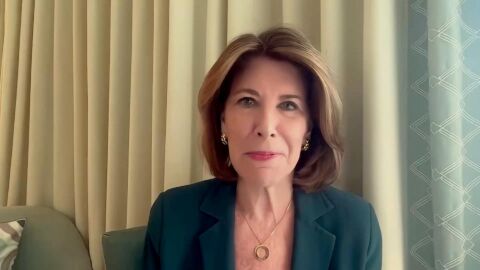
>> Hello everyone and welcome to Amanpour & Company.
Here's what's coming up.
>> Now more than half the world has that sense of democracy, of individual rights and freedom.
And that's what they stood for 250 years ago.
>> As America turns 250 years old, is it in the grips of a full blown identity crisis?
I ask journalist and historian Walter Isaacson.
Plus, Palestinian reporter Al al-Samoudi recounts the brutal conditions he experienced inside an Israeli prison after being jailed for a year without even being charged.
Then, protecting our planet and its extraordinary wildlife on his 100th birthday, a look back at my conversation with the beloved British broadcaster, Sir David Attenborough.
Also ahead, Sesame Street CEO Sherrie Rollins Westin joins Hari Sreenivasan to discuss her new book, What I Learned From Mom, which reflects on the important life lessons that mothers give some of America's most successful people.
♪♪♪♪♪ >> "Amanpour & Company" is made possible by... Committed to Bridging Cultural Differences in Our Communities, and by contributions to... And by contributions to your PBS station from viewers like you.
Thank you.
Welcome to the program, everyone.
I'm Christiane Amanpour in London.
It's 250 years since the Declaration of Independence that brought about the United States of America.
It's an important milestone, but also a reality check on the nation's current identity crisis.
With midterms looming, the U.S.
right now is more deeply polarized than ever.
Overseas, too, the Trump administration is waging multiple conflicts that it began, and all while threatening to rip up long global alliances that the U.S.
was fundamental in creating.
In his new book, "The Greatest Sentence Ever Written," Walter Isaacson reexamines the second line of the Declaration of Independence and how it continues to inform what it means to be an American to this very day.
Walter, of course, is my colleague on this program, and we spoke here in London just after the news of the death of CNN founder Ted Turner.
Walter had been chief executive of CNN in the early 2000s, and I've been here 43 years, almost since the beginning.
Walter Isaacson, welcome to the program.
- Thank you, Krishna.
- Part of our program, of course, and my former boss as president of CNN.
- We're colleagues.
We were all together back then.
- I know, you were the boss then.
Now we're colleagues.
Let me ask you, of course, the passing of our great founder.
I mean, it's really an irreplaceable loss, and he was a unique individual.
You have written so much about the geniuses of our era in every field.
And I think you count Ted as a genius.
Totally, a total innovator.
I always write about innovation, which means thinking out of the box.
And this notion that you do a 24-hour cable news around the world, global, it changed geopolitics, it changed our world.
It was partly because Ted was crazy, but he was crazy like a fox and we all loved him.
It's the kind of crazy that's very good crazy.
Exactly, makes you march through walls for him, but also to see things that people couldn't see.
People told him he was crazy to try to start a satellite news network type thing, but the world is so different because of it.
And when you were asked to be president shortly before 2001, 9/11, it had been called Chicken Noodle News for a long time.
What did you think you were getting into?
Well, I knew that it cared with you there and Nick Robertson and all these people about international coverage, Wolf Blitzer and others, that it was kind of problematic back then, you know, before I came because there was no big news.
You were covering shark attacks or OJ Simpson car rides or something.
But then when it really mattered and 9/11 happened, I'll tell you a story.
9/11 happened.
I'm in that newsroom in Atlanta.
It's about 7 a.m.
Eason Jordan, all the people you know there, were watching the plane.
The plane's hitting.
And Ted Turner was not really involved with CNN much then because the Time Warner people had kicked him upstairs.
But our part- - He's AOL, you kicked him further upstairs.
- Yeah, and they didn't want him involved, so he didn't come to the newsroom much.
But when that Twin Tower started to come down, I said to Eason and others, "Wait a minute."
I went up to the fourth floor at CNN Center, and Ted was in his office.
I said, "Ted, can you come down to the newsroom?"
He said, "Well, I'm not."
I said, "Ted, we need you."
And he was watching this.
And he grabbed a sword from the wall of his office, and he came down to the newsroom and he said, "This is why we created this network.
Cover this war right."
- That is really a great story, and it is his legacy.
And not just cover it right, but cover all sides of the story.
You know, it was an American, he's an American entrepreneur, it's an American network.
But he never covered it just from the American side.
It wasn't rah-rah patriotism or political agenda.
He told us we had to cover all sides of the story.
And that almost seems quaint in today's highly politicized media world.
- It was really bad because we were all one country right then after 9/11, but then a polarization set in.
And you saw it with the rise of other cable networks.
People would accuse CNN of being, you know, non-anti-American or something, simply because we were interviewing people on all sides.
And that's what we're starting to lose these days, is this notion that you really want an objective news station that covers all sides.
Now let's get to your book and let's get to where we are in America right now, not just the media, but American society, civil society, the respect for constitutional precedent and norms.
It does seem, as America's about to celebrate 250 years of the Declaration of Independence -- and you've just written a new book, which I'm going to ask you about -- that this is a moment of massive identity crisis and a crisis of -- almost a constitutional crisis.
Oh, is that too dramatic?
No, I think it's right, although we've been here before.
And if you remember 50 years or so ago, we had gone through Watergate, the resignation of the president, the assassinations of Kennedys and Kings, urban riots, and then we had our bicentennial and rang the Liberty Bell, the tall ships came in, and we healed.
We came together as a nation.
I was hoping this would happen for our 250th because we are so polarized.
And it's why I wrote this book, which is let's go back to the Declaration.
We hold certain truths to be self-evident.
Let's remind ourselves.
And when I say ourselves, it's not just America, but now more than half the world has that sense of democracy, of individual rights and freedom.
And that's what they stood for 250 years ago.
And we really should try to celebrate it this July 4th.
- Celebrate and try to restore it because it seems to be framed-- - Defend it.
- On defended.
I mean, I'm watching from abroad, but the great values that the Declaration gave to the world, not just to America, and the rule of law and all the norms just do seem to be under attack by this current Trump administration who makes no bones about it.
They believe in the maximum extension of executive power at the expense of all the other branches of government, legislative, judicial, media.
I think what you've seen though is it's longer than that.
It's the past 20 or 30 years where globalism and free trade were great at creating wealth, but it hollowed out a middle class, a working class, whether it be in Europe or the United States, and you had a backlash.
And sometimes we didn't fully understand it.
I mean, we who lived in Washington or New York and others.
And I think we have to get back to that notion of common ground, where if we're going to have wealth in a society, whether it's AI driven or technology driven, we have to make sure everybody participates and that we all share a certain common values and common services.
That got a bit lost.
So you've had a populist revolt, whether it's here with Brexit, whether it's in Hungary and other.
But you also see the pendulum starting to swing back.
So I'm optimistic.
- Good, I'm glad you're optimistic because it's very important.
America is the world's only superpower and has those unique ideals that it has been transmitting to the rest of the world for so, so many years.
Book is called "The Greatest Sentence Ever Written."
What is it and why?
- Well, it's the second sentence of the Declaration.
We hold these truths to be self-evident, that all men are created equal, endowed by their Creator, with certain unalienable rights, among them life, liberty, and the pursuit of happiness.
Pretty quick, right?
And it seems like we could all say it by heart, but I wanted us to look at each of those phrases.
What do you mean by created equal?
What is the pursuit of happiness?
When we ask about an economy, well, Jefferson had, the phrase was pursuit of property, when John Locke wrote it.
Jefferson says pursuit of happiness because you want a good society.
So let's look at those values that we share.
That sentence did not describe America in 1776.
One-fifth of the continent was enslaved people.
But that sentence became a forcing mechanism.
Four score and seven years after it's written, Lincoln uses it at Gettysburg to say, "A nation conceived in liberty and dedicated to proposition that all men are created equal."
He's burying 7,058 people who had died to make that sentence more true.
Martin Luther King quotes that sentence.
So that sentence becomes a mission statement not just for the United States, but for all people who love freedom around the world.
- So, unfortunately, approval of U.S.
leadership, according to Gallup, has declined by 10 points or more in 44 countries around the world between '24 and '25.
Declines would concentrate amongst U.S.
allies, including many NATO partners.
China has surpassed the U.S.
in global approval in 2025.
This is crazy stuff.
This is game-changing stuff, possibly.
What does America have to do to regain its supremacy, at least in human rights and civil rights and all the constitutional rights.
I don't mean militarily.
I mean in all the rights that the Declaration gave the world.
When you talk about the Declaration, I talk about the Great Second Sentence.
But the First Sentence explains that, which says, "A decent respect for the opinions of mankind."
That's what Jefferson and the Founders had.
And what we need to do is understand that our power comes not just from our battleships, but because of our values.
And American foreign policy always has to be a balance or an interweaving of realism, where we look at our national interests, and idealism, where we say we're standing for these values around the world.
I think we've lost that balance now.
We have to reassert that we're the country that believes in individual rights, freedom, and democracy.
- Walter, I want to just refer to a couple of images.
There's a beautiful image which will show, as they were writing, the "All are created equal."
And obviously, Jefferson's valet was a slave, and he's not visible in this painting.
And then the sentence, the greatest sentence, was at first called, it was called "sacred," and then they put "self-evident," these principles.
- You see a balance, because Jefferson writes, "We hold these truths to be sacred."
If you look at the Declaration, first draft, there's the apprentice panel, Benjamin Franklin, crossing that out with backslash and putting self-evident.
He's saying we're trying to create a new type of nation in which our rights come from rationality and reason.
Then it goes on to say endowed with certain unalienable rights.
John Adams puts it, endowed by their creator.
What you see there is a balance.
A battle.
And a balance.
Where they understanding that there's a rights of, comes from rationality, but also divine providence, gracing our nation, and that we shouldn't tear ourselves apart on religion.
We have to get back to that notion that we have contending forces, but we have to keep them in equilibrium.
- Okay, so two questions then.
The issue of religion, there's a clear separation of church and state in the United States, unlike in many, many parts of the world.
And yet, the president is basically, without shame, putting up AI images of himself as Christ, even though he says it wasn't, then with Christ, then you have the secretary, he calls himself, of war, using the crusade language and prayers from the Old Testament and et cetera, and you, to justify this war on Iran.
That's not what the founders had in mind.
Well, the founders were deists, most of them, Jefferson, Adams, and Franklin in particular, meaning they believed in the idea of a creator, but they didn't believe and enforce any particular dogma of any particular religion.
And they brought a new type of innovation to this planet, which was a nation that respected all forms of belief.
During his lifetime, Benjamin Franklin donated to the building fund of each and every church built in Philadelphia.
And at one point, they were building a new hall next to Independence Hall.
He wrote the fundraising document and he said, "Even if the Mufti of Constantinople were to send somebody here to preach Muhammadism to us, we should offer a pulpit and we should learn."
And on his deathbed, largest individual contributor to the Mikva Israel congregation, the first synagogue.
So when he dies, all 35 ministers, preachers, and priests march arms with the Rabbi of the Jews to the grave with his casket.
That's what they were creating.
That was the innovation they were creating back then and we can't lose it now.
Walter Isaacson, thank you so much.
Thank you.
Great to be with you again.
Now one of the things Ted Turner told us was to report all sides of the story.
We take that responsibility very seriously indeed.
And we turn now to the West Bank and the targeting and detention of Palestinian journalists by Israeli forces.
The Committee to Protect Journalists says more than 100 journalists have been imprisoned in Israeli jails since October 7, some without trials or even charges against them.
Many recount beatings, abuse, and even torture.
The Israeli military denies all those claims.
Ali al-Samoudi is a Palestinian journalist who covers what the Israeli forces are doing to civilians in the occupied West Bank.
After a year in prison, he was freed last week, and he tells Jeremy Diamond about the brutal conditions that he and Palestinian prisoners have been facing.
The man gingerly walking down the steps is Ali al-Samoudi, a well-known Palestinian journalist.
I've worked with Ali several times and I barely recognize him.
The 59-year-old has just been released from Israeli prison, where he was held for a year without charge and without a trial.
Ali, it's so good to see you.
How are you?
The physical toll of his detention now on display.
This is what Samoudi looked like when I last worked with him, three months before he was arrested.
He lost 130 pounds in prison, about half his body weight.
It was only when he emerged from prison where mirrors were banned that he saw his face for the first time in a year.
Dozens of Palestinians have also emerged emaciated from Israeli prisons.
Where Israel's Supreme Court ruled last September, the state is failing to meet prisoners' basic nutritional needs.
You had already interviewed, I'm sure, Palestinians who were held in Israeli prison.
But what was it like to see it and experience it for yourself?
Israel's prison service did not respond to a request for comment about Samoudi's detention.
The beatings brought added pain for Samoudi, who was shot by Israeli troops in 2022 alongside Shireen Abu Akhle, the Palestinian-American journalist who was killed in the same incident.
But it's what Samoudi witnessed that's most difficult to recount, like the young man in his cell who was refused medical treatment.
The young man is Louay Turkman, a 22-year-old from Jenin who was also held without charge.
Samoudi's first nights of freedom have been sleepless, spent worrying about those still imprisoned, including fellow journalists.
Samoudi is among 105 Palestinian journalists who have been imprisoned by Israel since October 7, 2023, according to the Committee to Protect Journalists.
33 are still being held in Israeli prisons, nearly all of them without charge.
That pace of detentions landed Israel as the third worst jailer of journalists worldwide last year, behind only China and Myanmar.
When we asked the military at the beginning, when you were detained, we said, "Why?"
I know.
Why was Al al-Samoudi a journalist we've worked with detained?
They said you were, quote, "identified with the Islamic Jihad terrorist organization and suspected of transferring funds to the group."
Ah, no.
But isn't he afraid that speaking out could land him back in prison?
But he says being a journalist is his life's mission, and he will keep reporting.
And just a note, it was a Palestinian photographer, Saher Al Ghora, who recently won the Pulitzer Prize for his coverage of Gaza.
Now for millions of people all over the world, he's known as the voice for nature.
Spanning eight decades, Sir David Attenborough has narrated and worked on more than 100 natural history programs.
He was the first to really bring nature's greatest wonders into living rooms all over the world.
Today, he's turning 100 years old.
When Sir David turned 90, he joined me in the studio in London to show and tell me about his fascinating adventures in pursuit of our natural world.
Sir David Attenborough, welcome to our program.
- Thank you very much.
- You turned 90 this year and you are still going gangbusters.
What is the secret of your passion and your energy still today?
Well I think it helps to be interested in what you're doing and of course an awful lot of people including me would actually pay to what I'm doing to be truthful and so why stop?
But it's a lottery isn't it?
I mean I know lots of people cleverer than me or whatever all sorts of things but who can't do it anymore.
I mean it's not their fault that they can't remember things.
Well I can't remember a lot of things but you know not being able to walk is pretty bad.
But you have so much energy, you're so active.
What do you remember about how you first got fascinated in this world of wildlife?
I think that every child born is interested in the world of wildlife.
And by the age of four they're still interested.
I mean I took out a godson once, he turned over a stone, he said, "Oh, look what a treasure, a slug."
And of course he's right.
You know, what are those funny things at the front for?
How can it see?
What does it feed on?
How does it even move?
- And people have come to know and love you and your programs because of the way you relate to the animals and you never seem to lose that whoa, that wow factor.
What, if you could, would be your biggest wow factor in terms of the animals that you have met and, frankly, communicated with?
Well, I mean, you can't... I can't communicate with a tiger, you know.
I can't communicate with a jellyfish.
We're primates and we can... And we can communicate with other primates.
There are other things, too.
I mean, we can communicate with dogs, and we can communicate with dolphins, if you're clever enough.
Well, you say primates, and of course, there is that classic footage of you with the gorillas, where you were doing a presentation to camera, and all of a sudden, the gorillas sort of took over.
Hmm.
We're just going to play this.
This is how they spend most of their time, lounging on the ground, or glooming one another.
Sometimes they even allow others to join in.
It never gets old, that, Sir David, it never, ever gets old.
Well, it couldn't have happened, of course, except for an amazing, amazing woman called Iron Fosse, who habituated those, so they were custom.
Again, I get all kinds of unjustified credit, you know, and reflected glory.
People think how clever.
Diane Fossey made that possible, not me.
And you had this amazing moment also with a baby rhino, and literally you got on all fours and you started to make rhino noises, or tried to imitate the noises that the rhino was making.
But you know, you don't often see a grown man on all fours communicating at the animal's level.
Well, naturally.
I mean, yes, it's not terrifically clever to be able to fall on all fours.
I mean, I will do it if you like.
I don't want you to do it.
Let's listen for a second.
I mean, it is amazing, and as you say, he had a cataract, he was living in a very dark world, then he had an operation.
But I just want to fast forward now, because those rhinos, plus the elephants, are facing very, very serious peril to their existence.
Some are facing extinction.
Do you ever worry after six decades of doing this, that, you know, this great planet, this great wildlife is in deeper danger than even the most dedicated conservationists can prevent?
Yes, I do.
Of course I do.
The awful thing is that we know how to fix it, you know.
It can't be done.
It isn't magic.
We know the steps that can be taken and we need to get the world's nations to agree to do it.
And that's the problem.
It can be done.
Are you in any doubt about the man-made impact on the climate and that we as humans have to change this?
There's no doubt about it.
There is no doubt that the globe is warming.
There can't be any doubt about that at all.
The argument can be as how far we are responsible, but even if we weren't responsible, we ought to be doing something to stop it.
And we can, again, we know what to do.
We should stop burning carbon.
Simple as that.
And again, we can do it if we want to do it.
Just the slightest concentration by the technologically advanced nations of the world to try and find a way of taking renewable resources from the sun and the wind and the sea to replace carbon-based energy can be done.
We've got all the basic science we need simply to refine the technology to make it cheaper than taking it from the ground.
And you are a believer that man, humankind, affects our climate and the global warming?
Oh, yes.
I don't have any doubt.
And if you look at the graph from the Industrial Revolution, look at before Industrial Revolution as to how much carbon dioxide there is in the air.
And then you suddenly see the graph climbing.
And then you plot that against the industrialisation of mankind.
Let's go from this industrialised picture to the bird of paradise moment that you found when you were doing one of your programmes right here.
I mean, again, we're going to show you speaking as the bird wants to get his word in edgeways as well.
Carl Linnaeus, the great pacifier of the natural world.
(BIRD CALLS) When he came to allocate a scientific name to this bird, he called it... (BIRD CALLS) Woo-hoo!
Paradisia apoda.
The bird of paradise without legs.
(BIRD CALLS) (LAUGHS) Well, you finally got it out, what you were trying to say.
(LAUGHS) Well, that bird was bred in captivity, you see.
So it knew human voices.
And I'm sure it was reacting to me as though it was being courted in some kind of way.
What do you feel in terms of, you know, contact, in terms of emotion, when you have an incident and a moment like that, whether it's the Bird of Paradise, whether it's communing with the rhino or the gorillas?
Well of course it is, it takes you out of the human condition if I can put it that way.
I remember one occasion in a very remote part of northern Australia and I never forget, it's just one of those odd instances, but the sun came up and there was this billamong, fabulous lagoon in front of me, full of the most fabulous birds, egrets and there were crocodiles and duck and geese and so on, and they were all busy doing their business and they didn't know you were there, you know, and then suddenly the camera moved and it caught a glint of the light and then the whole lot took off.
But before then it had been paradise, you know.
Before humanity entered that was how nature is and originally once was and that's a moment of revelation, of recognition that there's something beyond us.
You also have explored other human tribes, the famous Biami tribe, am I saying that right?
What were you looking for then?
Why were you going after people, not animals?
Well, you know, it is a remarkable thing, surprisingly how eloquent you can be to somebody who doesn't know a single word of your language, or indeed haven't met your kind before.
But I would know that he was aggressive, feeling aggressive.
You would know by the way he moved his eyebrows and by the way he stared at you and so on.
And he knew I was not aggressive.
Now they seemed sufficiently confident for me to look at their personal ornaments and perhaps in the process discover a few Biami words.
In his ear he had what I recognised as a cassowary quill bent into a ring.
And the interesting thing is that is that one of the ways that you tell in that's in New Guinea the relationships of people is the way they count the gestures they use for counting they different from different groups so you want to three four five that's easy unless it goes one two three four five but it's very one two three four five what do you do then what's six in his land it was six seven eight you are kidding no no how did you get into this business in other words you know there you were loving your fossils you were working at the BBC at radio but how did you get to be a presenter was that sort of a pre-ordained I mean it's it's the showbiz thing I mean you know it's somebody falls down and get a chance I first went to Africa with a lovely man called Jack Lester who was a curator of reptiles in London zoo was there to collect reptiles and I thought it was a good idea to make a program about how our zoo man does that.
Tragically he got very ill after the first program and because there was a live ingredient in it the program was going to go on next week and the director of television BBC said Attenborough you were the only other person there you do it so I did.
I did actually read an anecdote that it wasn't actually such a smooth ride one of your first attempts at broadcasting was sort of sort of nixed and looking at that picture now I'm gonna point out to it because they said no we don't want Attenborough back again because you've got way too big front teeth that's true and the man who produced that photograph that very first interview where I was used as an interviewer he retired I looked through and there it was it said and it said from the head of the department, Attenborough, I think it said, Attenborough is an intelligent young man but he should not be used as an interviewer because his teeth are too big.
Well you certainly had the last laugh on that one.
But you know it is extraordinary because most people know of you, you know hundreds of millions of people all over the world for more than six decades have been watching you in the field with all these animals bringing us the wildlife.
But you were controller, you were the man in charge before all of that at BBC2.
You brought Monty Python Flying Circus to television.
I mean that's pretty amazing in itself.
Well I joined the BBC when television was very small, 1952.
And I was a producer for 10-15 years.
And then the BBC got a new network opportunity and they wanted a new controller and they asked me to do it.
And I did it.
I thought, you know, I can't go on trotting around the world, I thought.
So I got this desk job and then I was on that for four years and then she became responsible for both networks, which is when, in fact, Pon Monte Python was done.
And that was OK.
But then I'd spent eight years sitting behind the desk and, OK, you know, the kids have been educated, paid for the grand, you paid for the grand piano.
What are you doing?
You know, I thought, well, there's Patagonia.
You've never been to Patagonia.
I hear you.
I know how you feel.
LAUGHTER Patagonia and also underwater.
I mean, you did something, I think you weren't quite 90 yet, but you were getting up to 90, and you got into this unbelievable submersible and went down to the barrier reef, to the seabed.
Well, that's a doddle.
You're just getting into a thing, they screw the thing down and down you go.
Was it scary?
Claustrophobic?
Not at all.
Otherworldly?
No, because you've got to re-breathe.
You say you aren't changing.
I mean, I have been in other submersibles.
Then I'm there.
But you see, I'm just as though I'm sitting in an armchair watching television.
And there's a wonderful big giant green turtle.
Yeah, it is better than television.
It's a huge privilege, of course.
Fantastic.
But because the... I've done Submersibles earlier, where suddenly you have to worry about re-breathers, and getting hot, and so on.
But there, it was just a fantastic privilege.
You've been on the sea, you've been in the jungles and the deserts, and all over the place, even under the sea.
You've also experienced zero gravity.
You haven't been to space, but you've done that in simulation.
And the images are really amazing.
You just look as if you were having the best time of your life.
Tell me about it.
Well, that was just how you train astronauts, which is, you know, if you go up like that, you're on a swing.
You suddenly feel the feeling in your stomach.
So you're lifting off from your seat.
And it was breathtakingly exciting.
And the first time it happened, you thought, this is wonderful.
and then they said, of course, we're doing it again, and the second time, and then the third time, and after about five times, you think, well, I've probably had enough of this now.
And they say, well, I'm sorry, but we've got to do 35 because we're doing a testing of actually drugs for seasickness.
And so we had to go through.
So after 35 times, I thought that was enough.
That's enough.
What does space say to you, the last frontier, in terms of our environment, our universe?
Would you like to have explored that too?
Not really, not really.
Well, there's no animals there.
There are no flowers there.
Are we sure?
Yeah, absolutely sure.
If you think there's an orchid up there on Venus, there might be an orchid on a different Venus, but there's not one on that Venus.
Any regrets?
No, I mean it sounds terrible doesn't it really?
I'm tempted to say yes I'm sorry I spent the time behind the desk but that was rewarding in its way.
I'm just glad I didn't do it for the whole of my life.
Alright, we'll be following you on your trips.
Sir David Attenborough, thank you very much indeed.
Thank you.
Now, one of our founder Ted Turner's greatest endeavours was protecting the environment.
He became the biggest private American landowner in order not to develop, but to conserve that land forever.
Now, we turn to a project that's celebrating the life-changing lessons we learn from our mothers.
What I learn from mom is a new book by Sherrie Rollins Westin.
She is the CEO of Sesame Workshop, which produces the beloved children's TV show, "Sesame Street."
And she asks some of America's best-known success stories, how their childhoods and relationships with their mothers made them into who they are today.
And she tells Hari Sreenivasan it's a shout-out to the unique influence of mothers everywhere.
>> Christiane, thanks.
Sherrie Westin, thanks so much for joining us.
You and your co-author, Jeff Dunn, compiled a book of essays, "What I Learned from Mom."
And you got to speak to some amazing people, amazing moms.
You heard stories about how their moms have affected their lives.
27 different contributors here, everybody from Robin Roberts to Governor Westmore.
I'm looking at Diane von Furstenberg.
And I guess when you started hearing and seeing these stories, was there a parallel?
Were there similarities that started to leap out to you, given how wide the range of people that you were speaking with?
- Well, first of all, thank you so much for having me.
But yes, I mean, there were sort of certain common themes, but I think one of the things I love most about the book is how different they are.
So, you know, each story is really unique and some surprise you, some are rather humorous.
They're all moving.
And, you know, when I think of some of the similarities, I do think of gratitude that comes out a lot in terms of not just those we interview being grateful for their mothers, but the fact that their mothers sort of exemplified gratitude.
And I love that there are other real sort of themes along resilience, putting things in perspective, that these things are not going to be that big a deal.
There are some wonderful stories.
But I think that what's most interesting is it's not so much, if we were interviewing the moms, I don't think they necessarily would have had the same examples because it's not so much what my mom taught me or what was the best advice my mother gave me, it's what I learned from my mother.
And so often it was just these incredible examples or things that our individuals noticed and it had a real impact on them.
- I'm thinking about just this 20,000 foot view perhaps, but the idea of motherhood or the CEO of the household in itself has been kind of overlooked in society.
And Katie Couric kind of mentions that, that she was, what was it, trying to talk to somebody about an obituary for her mother.
- And her mother said, what was her job?
And because her mother hadn't had a career in terms of a title, they didn't want to write the obituary.
- I mean, and that's, you know, it's just- - Katie's mother was amazing.
And when you listen to Katie's stories, you know, just how important it was.
I think Katie always says it's so important to have a cheerleader.
Her mother was always her cheerleader and to have such incredible unconditional love.
I think that's another theme that comes through.
Kindness.
You know, Noah Kahn said that his mother said to him, "You don't have to like everybody, but you do have to be kind to everyone."
There are just a lot of wonderful takeaways around just the examples that mother set.
I love the story that Taya Leoni tells where her mother sort of when a bully was beating them up in the front yard, her mother ran out with I think a shoe and then marched over to the boy's home to knock on the door and his father slammed the door in her face.
Okay, but fast forward and Taya notices that her mother is constantly finding that young boy and sitting with him and reading to him and talking to him.
And it dawns on her how much empathy her mother has and that she saw when that door was slammed in her face, probably why that boy was struggling.
You know, so it's wonderful examples that are just very moving.
And there's a lot of humor too.
- Right now, in the past couple of decades, we've had this idea of kind of helicopter parenting or creating almost this bubble around your children.
And what struck me is throughout this, the conversations that you had, there were several examples of, you know, making people stronger and resilient through the adversity and not trying to really shelter them but saying, "Hey, this is our reality."
One that comes to mind is Governor Wes Moore's mom, too.
Also the sacrifices that mothers have made.
You know, Governor Moore has a wonderful line where he says that she wore sweaters so we could wear coats.
I think that what I love about it is you could dip in and you could just read people that you, you know, have, you may be a big Ken Burns fan or Henry Louis Gates, or you may read a cover to cover.
And again, it's, I owe Jeff Dunn the credit.
He's a former CEO of Sesame, as you mentioned, he's the co-author.
And it really was his idea because he felt like if his mother had been born in a different time, she would have been the CEO.
And that he was just a work in progress for her.
And it was his idea to see if other people had these similar stories of the big sort of impact that their mothers had on their lives.
- You mentioned a mom being a cheerleader, but it's also remarkable how many people, how many moms kind of instilled a confidence in their children just by being present and kind of being the backstop and the safety net and kind of just letting their kids know, you got this, I'm already here.
And also putting other things in perspective, I think it was Soledad O'Brien's mother who said, people are idiots.
So don't worry about what other people think, people are idiots, you know, or just, you know, that sort of perspective of, I think, Tori Birch's mother said, whenever there was sort of negativity, that you just had to think of negativity as noise and tune it out.
- And Darren Walker was mentioning about, here he is growing up, black, gay, in a small town.
And that's not easy in the era that he was growing up, or really even today.
- No, and when you look at the sacrifices his mother made, who moved to make sure that he was somewhere where he could have more of a chance.
He was one of the first in Head Start, 1969, the same time that Sesame started.
And it's a wonderful tribute.
Darren writes about his mother and his aunt, the role she played in his upbringing.
- There's also, you have this story with Ken Burns, who really kind of shares this moment about his mom's passing, and ends up really giving you a glimpse into what he's been doing his whole professional life.
- Well, I think that's a fascinating chapter because he literally says that it dawned on him, his mother died when he was only 11 years old.
And he said, you know, every year, when he blew out that birthday candle, he was wishing for his mom to be back.
So someone pointed out to him, isn't it interesting that your entire career is bringing people back to life?
It's bringing them, you know, when you look at, you know, Abraham Lincoln, or Louis Armstrong, Jackie Robinson, it's waking the dead.
And he said, this is really the impact my mother had on me.
- You and Jeff Dahn kind of take your own personal journeys through this.
You mentioned how Jeff came up with this idea, but I also wonder, you know, you said that you kind of thought you were more like your dad before starting this project.
And I wonder what it is that you learned about yourself and what you learned from your mom.
- Well, it is true.
I remember when Jeff said, you know, we need a chapter on your mom.
And I said, well, you know, I'm really more like my father.
And he said, well, I'll interview you.
So Jeff interviewed me just as we had interviewed all of the other participants.
And he kept saying, I don't know, Sherrie, I think the apple doesn't fall far from the tree.
It was really lovely because in a way, I'm not saying it was an epiphany, but it was, I did develop much more of an appreciation for how much I have gotten from my mom, how much I am like her, you know, in both good and bad, but I say with love, but also I just think I appreciate how much more of an impact she had on my life and where I am than I had really realized.
She's stubborn, but that has, you know, served me well in my work.
And she, but she also, when I really thought about it, because he was asking about my childhood, my mother was everybody's favorite mom.
I mean, every kid in the neighborhood was at our house.
And if we were in the top of the apple trees, she was in the top of the apple trees, which was quite young when she had me.
But I realized how much she loved being a mom I can so identify with.
I wasn't in the top of the trees with my children, but I've really loved creating those same traditions especially when my children were little.
- And your mom, you said, was still literally climbing trees into her late 70s, early 80s?
- Oh, 80s.
She broke her hip.
She fell from the top of an apple tree.
And I was like, "Why are you in the top of the apple tree?"
And she said, "Well, I was stringing the Christmas lights and they just look so much better if they're up high."
- What's interesting to me also is now, here we are kind of having this conversation in the context of Mother's Day.
And I had to look this history up a little bit, but back in 1870, the author of the Battle Hymn of the Republic is the person kind of credited with Mother's Day.
And at that time, it was really more of a pacifist cause.
She wanted women around the world to basically stand up for peace and not have their sons go out to war.
And now it's kind of like Mother's Day is kind of a commercial shopping event.
And it just seems to have, I don't know, taken a totally different turn than how we think about mothers, mothers in society and kind of the reverence that we give.
- Well, I think that's one of the things that makes this book so special.
And of course I do believe it would be a great Mother's Day gift.
But the fact that it is these celebrations and really thoughtful essays about each mom and the impact they had.
And it doesn't matter whether to, you know, to the point you made earlier, whether there's a career or a title, it's the lasting sort of relationship and impressions that a mother has, you know, on their children.
And when I bring it back to Sesame, you know, all of the, the author proceeds we are giving to Sesame Workshop to support our mission, driven work.
Most people love Sesame Street, but don't always know that we're a nonprofit and need a support.
So that was an opportunity.
But also we know at Sesame, how important the early years are and how important the engagement with a caring adult is, which is awesome.
That first engagement is often mom.
And one of the stories, we dedicated the book to Joan Ganz Cooney, who is the creator of Sesame Street.
We like to think of her as the mother of Sesame Street.
And when she was creating Sesame Street all those years ago, 1969, she said she had a hunch that the learning would be deeper if a parent were watching with a child.
And that's why there were Muppets and celebrities and musicians and humor.
And you fast forward, and I think that's one of the reasons Sesame is so relevant today, that of all ages, and so impactful because so much of what we do is creating content that is a catalyst for engagement between a parent and child, a caregiver and child.
So I think it's wonderful to dedicate it to her.
She's such a visionary.
- We should know that the Peter G. Peterson and Joan Ganz Cooney Fund are underwriters of this program.
So much of the work that Sesame does is grounded in research.
It's in developmental psychology.
It's about early learning science.
What does the science say about really just the importance of moms in a child's development?
- Well, there's nothing more important in the first five years of life than the nurturing care, that would be the development term.
That is engagement with a caring adult, a mom, a parent, a grandparent, a caregiver.
And when I say that the prescience of Joan to focus on the early years, 56 years ago, and engagement with an adult, when you fast forward, today we have all of the research, the neuroscience, that proves in fact that the way a child learns is that serve and return between an adult, between a caring adult and a child.
And that's how their synapses are formed and their brain develops faster in those first five years of life than any other time.
So there is nothing more important in a young child's life than having that engagement with a caring adult.
And this book is such a tribute to, you know, those incredibly caring adults, our moms.
- This is also a time where people are becoming a little bit more open with the difficult relationships that they might have with their moms or their parents.
There are more women choosing not to have children, sometimes by choice, sometimes by circumstance, right?
And I guess, how do you talk about this work to all these different people who are kind of in a different space for that traditional definition that we say as mothers, the image that gets conjured?
- Listen, it's very interesting because I won't say who, but there were some people we asked to be a part of the book who said, "You know, I love Sesame, I'd love to help, "but I just don't have the relationship with my mother "that would lend itself to this book."
And I appreciate that and understand that.
And I don't think it means that those individuals are any less successful.
I'm sure they had another caring adult in their life with a really strong relationship.
And I did a book event recently and someone raised their hand at the end and they said, "Thank you for doing this book.
I lost my mother a year ago."
And she said, "This book helped me reflect on the things that I loved about my mother throughout her lifetime."
Because so often when a parent is struggling or as we age, it's not quite the same relationship you had earlier.
And she was saying my mother was difficult in the end, through no fault of her own, through her health, through dementia, through all the things that we deal with as we get to a certain age with our, with, you know, as our parents age.
And to reflect, she said, the thought of it really made me stop and reflect on not the last few years, but my mother as a person and growing up.
And I think that's very powerful.
- About a year ago, Sesame had, I think it was Andrew Garfield on to discuss grief and healing after losing a parent.
And obviously that was a conscious decision by the program.
And you're trying to teach children how to navigate these difficult topics.
I mean, it's what you've done literally the entire time of the program.
How important is it that children are exposed to these kinds of conversations, these kinds of ideas at a young age?
I mean, frankly, 'cause the parents who are watching along with their children benefit from this too.
- Well, I think it's critical.
And we often make the mistake, we think of issues as adult issues, mental health, addiction, but parental addiction really impacts young children.
And we often think, well, they're too young, we want to shelter them, when in fact, that's the opposite of what we should do.
It's so important to talk to children, to respect them, to help them work through these issues in an age-appropriate way.
And I think one of the things that Sesame does so well is we give resources to parents how to tackle tough issues.
We've just launched new resources around emotional well-being because again mental health issues are not just adult issues, but to help parents know what is the right way to raise issues with their children, giving them incredible content, storybooks, videos that help model that in terms of the Muppets, and then something like you mentioned with with Andrew Garfield is a wonderful bit that we were able to share on social media with Elmo.
I cannot tell you the response you know from all ages on how powerful that is.
When you were writing this book were there kind of aha moments for the people you were interviewing because some of them not only are looking back at the impact their mother had but you know whether it's supermodel Cindy Crawford or other people you're talking to they also have children and they are moms now and you know sitting down for an hour or whatever to think about this is nowadays a rare opportunity.
So it wasn't so much aha moments as it was how much each of them resonate and then when you mentioned being parents themselves you know Cindy Crawford's daughter Kaia Gerber is also in the book and it's a lovely lovely two chapters to to have her talking about her mother and her grandmother growing up you know it's it's quite it's quite a moving story when you look at Diane von Furstenberg you know her mother was in a concentration camp and she was liberated I think at only 22 years old like 40 some pounds was told she could not have children for at least three years and nine months later Diane was born and so her entire life she feels her mother said that God gave me life to give you birth so Diane says life is just a victory and everything on top of it is gratitude.
So, you know, there were some really powerful stories that I just think are have wonderful takeaways.
The book is called What I Learned from Mom, co-author Sherrie Rollins Westin, who also happens to be the president and CEO of the Sesame Workshop.
Thank you so much for your time and for writing the book.
Well, thank you so much for having me.
And that is it for our program tonight.
If you want to find out what's coming up every night, just sign up for our newsletter at pbs.org/amanpour.
Thank you for watching and goodbye from London.
(upbeat music) - Amanpour & Company is made possible by Committed to bridging cultural differences in our communities, and by contributions to your PBS station from viewers like you.
Thank you.
>> You're watching PBS.
♪ ♪ ♪