
Harper Lee: American Masters director Mary McDonagh Murphy met author Harper Lee on June 30, 2015, in Monroeville, Alabama, before the release of Lee’s second novel, Go Set a Watchman, on July 14, 2015. In an American Masters exclusive, Murphy reports on meeting Lee and interviews Lee’s lawyer, Tonja B. Carter, Lee’s current literary agent, Andrew Nurnberg and Lee’s friend, Wayne Flynt.
Features
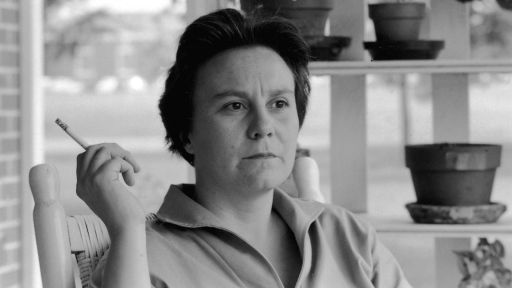
Is it time to reevaluate “To Kill a Mockingbird?”
The Executive Director of the National Book Foundation considers the famous book's place in schools...
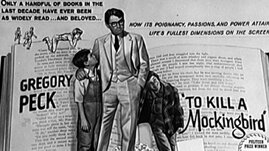
Classroom Resources: Harper Lee
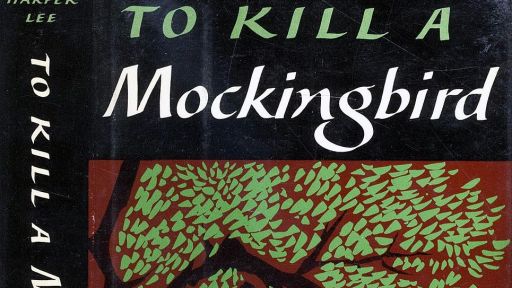
“To Kill a Mockingbird” famous quotes
A few passages from the book -- some famous, some quirky -- that remind us...
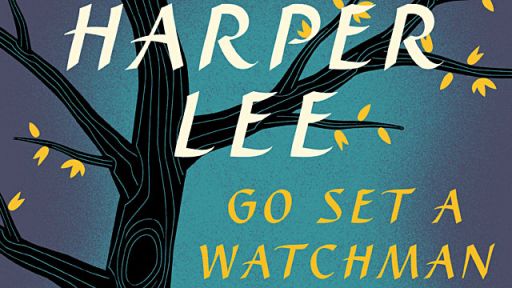
Go Set a Watchman: Read First Chapter
Read the first chapter of Harper Lee's Go Set a Watchman on American Masters. Harper...
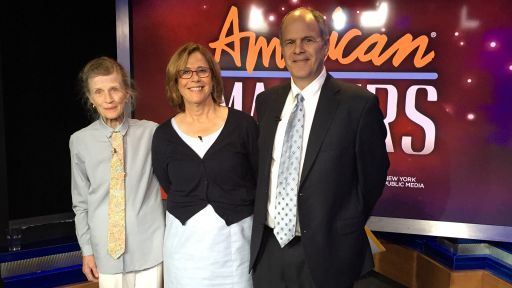
Harper Lee Live Q&A: Joy Brown and Mary McDonagh Murphy
Questions about Harper Lee, her history and her new novel are answered in a live Q&A.
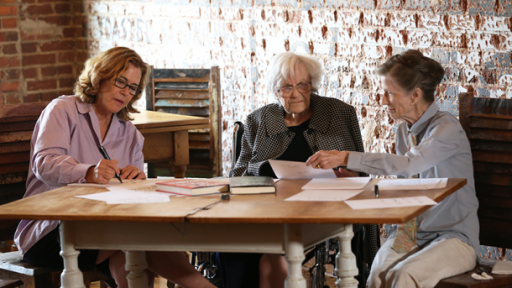
Meeting Harper Lee: Exclusive Report from Filmmaker
Quiz: How Well Do You Know Harper Lee?
Take a quiz to test your knowledge of Harper Lee, To Kill a Mockingbird, and...
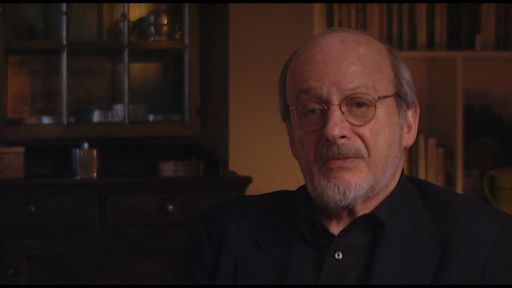
E. L. Doctorow Interview: In Memoriam
On June 19, 2001, E.L. Doctorow was interviewed for American Masters – F. Scott Fitzgerald:...
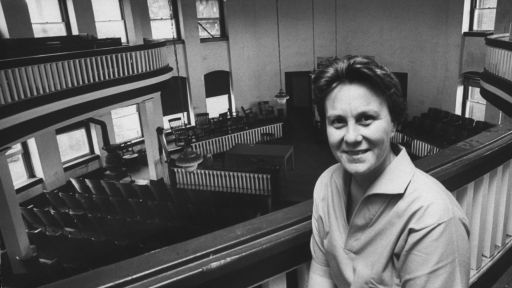
Harper Lee By the Numbers: The Writer and Her Novels
The author of To Kill A Mockingbird and Go Set A Watchman has died
Six Degrees of Harper Lee
Connections between the author and our other American Masters
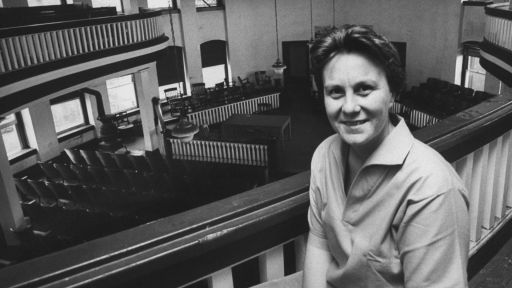
Harper Lee - Preview
An updated version of Mary McDonagh Murphy’s 2012 film in time for Harper Lee's new book.
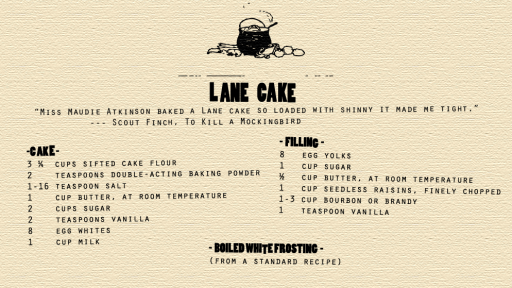
The Cake That Made Maycomb Famous: The Lane Cake
The Lane Cake in To Kill a Mockingbird is “...so loaded with shinny it made...
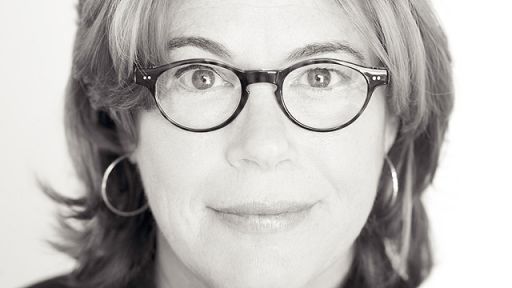
Interview with Director Mary Murphy
Director Mary Murphy describes her the creative process researching and interviewing subjects for her documentary...
Excerpt from Director Mary Murphy’s Scout, Atticus, and Boo
In an excerpt from her book, Scout, Atticus, and Boo, director Mary Murphy details the...
Wally Lamb on To Kill a Mockingbird
The acclaimed author discusses To Kill a Mockingbird as an agent of radical change
Mark Childress on To Kill a Mockingbird
Childress explains how the character Scout had a radical viewpoint in the segregated south
Richard Russo on To Kill a Mockingbird
The Pulitzer Prize winning author discusses the impact of Harper Lee's characters
James McBride on To Kill a Mockingbird
McBride reflects on Harper Lee's subtle activism and the role of writers in civil rights
TRANSCRIPT
(bright music) - [Narrator] Nell Harper Lee went out to lunch, celebrating a day no one thought would ever happen, the publication of a long lost novel.
There she is at the head of the table surrounded by her lawyer, agent, and visiting publishing executives who came to Lee's home town, to present the 89-year-old author, with the very first copies of 'Go Set a Watchman', soon to go on sale.
The novel was rediscovered after languishing in a safety deposit box for decades.
Even the author herself, thought it had been lost or destroyed.
Lee hasn't published a book since 'To Kill a Mockingbird' in 1960, and famously hasn't done any press.
No interviews, nothing.
That makes her mysterious, but her lawyer Tonja Carter says she's not.
- [Tonja] She just doesn't, she doesn't wanna talk anymore and it just, it can get out of hand.
I know she's been misquoted and she just stepped out of the limelight.
She's not a recluse, she has lots of friends that still come to see her and she still goes places with them, but she just does not like the public life.
- [Narrator] With the announcement of 'Go Set a Watchman' came questions, about how it came to be found and how involved Lee was in the decision to publish.
- [Tonja] Anybody that knows Nell, anybody that sees her regularly, knows that she makes her own decisions.
And she makes them very firmly and you do not change her mind.
She'll take suggestions, she does do that, she'll take your suggestion, but in the end she does what she wants to do.
She's Harper Lee.
- [Narrator] And Harper Lee said she wanted to see her new book.
So in Monroeville, Alabama, which bears a resemblance to her fictional Maycomb County, the lawyer and her famous client, allowed it all to be recorded.
- [Tonja] Jonathan and Michael-- - [Harper Lee] Trying to do what?
I can't hear.
- [Tonja] They're gonna give you your published book.
- [Narrator] The novelist is confined to a wheelchair after a stroke, is extremely hard of hearing, and has vision problems.
So writing things down makes it easier for her.
Michael Morrison, president of HarperCollins, was there to give Lee a copy of her new-old novel.
And to the right, is Joy Brown.
A lifelong friend, and early benefactor.
- [Harper Lee] Thank you, thank you very much.
- [Michael] 58 years in the making and finally it's here.
The first copy-- - I see.
- [Michael] Of 'Go Set a Watchman'. - [Harper Lee] Wonderful, thank you.
- [Narrator] Lee put 'Go Set a Watchman' aside, when her editor asked her to try writing a different story.
A story many millions of us have read.
Carter works side-by-side with the novelist's older sister and lawyer, Alice Finch Lee, who died in 2014.
And it was Carter who brought the manuscript to light.
- [Tonja] I know ain't that great!
I was the first person to read it.
- [Narrator] Carter says she didn't know it then, but saw a clue to 'Go Set a Watchman' a few years ago, when she was going through the author's papers.
- [Tonja] My eyes landed on a character named Hank, and so I thought, well, he's not in Mockingbird, he got cut out.
- [Narrator] In 'Go Set a Watchman' Hank is a suitor to the grown-up Scout, now called, Jean Louise.
- [Tonja] And so I thought well that was another short story that didn't make it in to Mockingbird.
And I didn't do anything about it until I had reason to go back over there one day and I thought, I'll just check, and see what, perhaps Hank is a short story.
And I started going through the top part of the manuscript of Mockingbird that is heavily marked up, and just her handwriting and her editors handwriting, and then there was a page that was just a blank page, that said 'Go Set a Watchman', York at Harper Lee, York Avenue, New York.
I went to Nell and said, 'When I was in the safe deposit box, 'I came across a novel.'
And she said, 'What novel?'
And I said 'Go Set the Watchman' And she said, 'No, it's Go Set a Watchman.'
So I said, 'Well, What is that?
Is it finished?'
She said, 'Of course it's finished, 'it was the parent of Mockingbird.'
And so that began this, 'May I please read it?'
And just dying to read it but she said, 'Sure it's, it's never been published 'and you probably won't like it but, sure.'
- [Narrator] 'Go Set a Watchman' is set in the mid-nineteen fifties.
It unfolds over a three-day period when Jean Louise, now 26 and living and working in New York just as Harper Lee did, goes home for a visit and confronts her families resistance to integration.
This novel much more forcefully about civil rights, culminates in an argument with an aging Atticus a lawyer, as was the novelist's own father.
- [Tonja] I got to read what happened to Scout.
That was just, she receives letters all the time, 'What happened to Scout?
'What happened to Scout?'
And now everybody gets to see what happened to the grown up Scout.
And I've asked her before, did Scout become a lawyer?
What happened to Scout?
She never would say.
So here it is.
- [Andrew] Well you can imagine I was on the one hand, very excited, that this existed.
And on the other hand, as a professional, I was very weary.
Because nobody ever knew about this.
Perhaps this was something that, shouldn't have been published, perhaps it was just something that may not be up to scratch.
- [Narrator] That's Andrew Nurnberg, Lee's literary agent since 2013.
- [Andrew] And last thing you can do if you are in our profession, is to try and milk something that, or get enthusiastic about something that isn't up to par.
So I approached it, with some excitement, considerable excitement if you really want to know, but also just trying to be, have my feet on the ground, you know?
- [Narrator] Did anyone outside Lee's business circle read the manuscript and share an opinion about whether it should be published?
Anyone who would not profit?
- [Tonja] There were couple other people that did read it too, that will say they didn't because nobody want, I mean if this is a big bomb nobody wants to say well, I told her it was okay to publish it.
- [Interviewer] You have the best of interest-- - [Tonja] Right.
- [Interviewer] Someone independent?
- [Tonja] Some people that she knew, yes.
- Independent-- Independent.
- [Interviewer] Of any deal read it and said-- - [Tonja] Oh yes, independent of any deal read it, yes.
- [Interviewer] And said, - [Tonja] It's good, it's good.
It's not Mockingbird it is not Mockingbird and anybody expecting the wonderful, flowing flower of Mockingbird might be disappointed because this is a first submission, and it is a complete book but it is not edited, so, it is exactly as she wrote it.
- [Narrator] Exactly what was submitted to publishers all those years ago.
- [Andrew] You know this is such a fairytale and inevitably there are gonna be people who want to just put a pin in this balloon, because it's too good to be true, but by good fortune, Nell happens to have, a stash of papers which comprise the correspondence from her agent, Maurice Crain, to her and his correspondence takes the form of carbon copies of letters that he sent to her.
So I haven't seen the actual letters with his signature but I have the carbon copies, which are in her file.
This tells you exactly when Watchman was offered by Maurice Crain.
We agents in this day and age tend to rather over-egg our pitchers and we write far too much normally when we send a note.
This one is as short as this.
And it simply says to this editor, Evan Thomas, 'Dear Evan, Go Set a Watchman by Harper Lee 'will be an eye-opener for many northerners 'as to souther attitude, 'and the reasons for them in the segregation battle.
'Also, and incidentally, Miss Lee can write.
'She's about 30, and bright as a button.
'Sincerely.'
That was in April 1957.
- [Narrator] 58 years later, a publisher said yes.
- [Interviewer] What has been her response to the idea of having another novel out?
- [Tonja] She's just, at first she was like a child.
It was so exciting that she was gonna get to see another book published, and she started getting excited and friends started getting excited and, she's just almost giddy at one point.
- [Joy] Thank you.
- [Harper Lee] You're welcome, thank you.
(Michael laughs) - [Narrator] As we said, seeing and hearing is hard for Harper Lee.
But the people who see her regularly say her physical impairments don't reflect her mental acuity.
They say their conversations are rich, meaningful, laden with literary references, and her signature sass.
- [Woman] Oh she has all her marbles, let me tell you.
- [Narrator] Her agent remembers the first time he talked with her.
- [Andrew] She then proceeds to give me, the most wonderful impersonation of one of her favorite authors, CS Lewis.
She attended some lectures he gave when she was at St. Hilda's in Oxford.
I think she spent only a semester or two semesters in Oxford, I don't know exactly.
But not only was she so interesting about him, she did the most extraordinary impersonation.
Not only the accent but also the way he kind of moved his mouth and it was completely hilarious.
And she was just cracking jokes all the time.
And we didn't spend that long together.
And we talked a little bit about what I did, and what I hoped I might be able to do for her.
And then we left, that was it.
- We talked about CS Lewis.
We talked about Truman Capote.
We talked about Roger Marx.
We talk about Gregory Peck.
We talk about, Thomas Wolfe.
We talk about Maxwell Perkins.
- [Narrator] Wayne Flint is an Alabama historian and a close friend.
- Ours has been an enormously cerebral kind of relationship.
Our letters are filled with allusions, wonderful allusions.
In April, Nell invited us to go to King Lear with her, and she had bought the performance, she loves Shakespeare, she loves the Shakespeare Festival, in Alabama.
And she's muttering in the play to Joy Brown, her good friend from New York City.
And my wife and I are thinking, 'Oh lord, and everybody's gonna be think 'she's senile and demented 'cause she's muttering.'
And everybody's looking around, this old woman who's muttering all the time.
She was giving their lives, she was repeating their lives.
And it might be from the first act but then again it might be from the second act.
It might not have anything to do with what's going on on stage.
Finally they wheel her out.
And she's sort of muttering, 'Why are you doing this?'
So I say take her out, she goes to the patrons lobby, and the patrons lobby, I go up side her wheelchair, at intermission and I get down on my knees and I say, 'Nell!'
Because you have to get really close and you have to yell.
'Nell, you could be King Lear!'
Of course, King Lear is mad.
She knew exactly what I meant.
'You could be King Lear!'
And she said, 'You could be my fool.'
And I'm dumbfounded, and Joy Brown is guffawing with laughter and everybody else is laughing at my embarrassment, that this 89-year-old demented woman is so much intellectually quicker than I am.
- [Narrator] But getting back to that day in June, - [Tonja] Joy wants to introduce you to Mary Murphy.
She did 'Hey Boo' with Allen.
- [Mary] Did you ever think you would see this published?
- [Harper Lee] Of course I did, don't be silly.
(Mary laughs) - [Narrator] 'Don't be silly' Harper Lee said, 'Of course I did.'
Read it as you wish, Harper Lee knows all about ambiguous endings.
(bright music)
You May Also Like

John Muir in the New World
Explore the life and legacy of America's first environmentalist and Sierra Club's founder
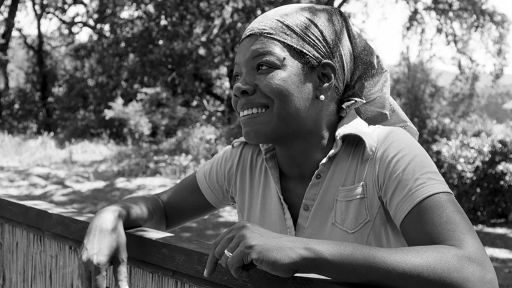
Maya Angelou: And Still I Rise - Trailer
Maya Angelou gave people the freedom to think about their history in a way they never had.
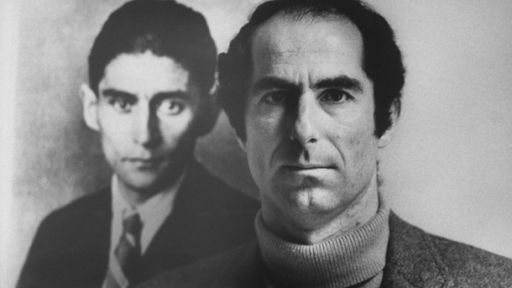
Philip Roth: Unmasked
Pulitzer Prize- and National Book Award-winning novelist Philip Roth tells his story.
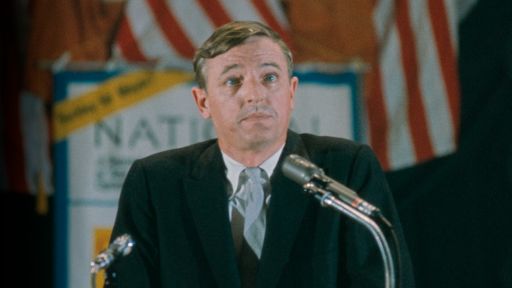
The Incomparable Mr. Buckley
Discover the intellectual evolution and political legacy of William F. Buckley, Jr.

Salinger - Trailer
Watch the trailer to "Salinger," the director's cut airing January 21, 2014.
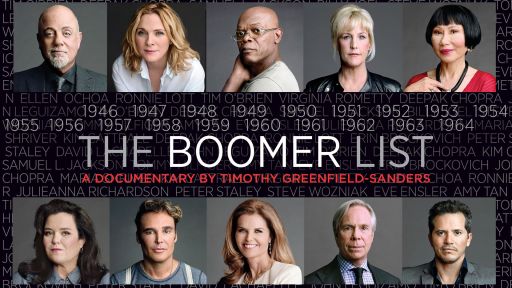
The Boomer List - Trailer
The baby boomer generation (1946-1964) has significantly and uniquely changed our world.