Editorial: LGBTQ+ Rights and the Fight for Equality

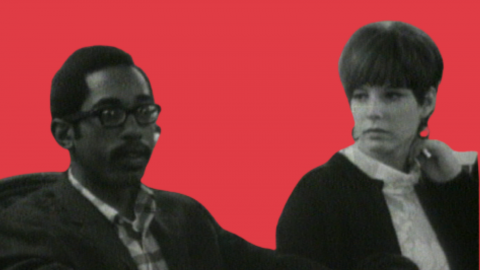
A rare glimpse into some of the debates that centered around homosexuality and equal rights in 1961.
By Nida Khan
This content contains scenes that may be too sensitive for some viewers.
On April 27, 1953, President Dwight Eisenhower signed Executive Order 10450, banning homosexuals from working for the federal government or any of its private contractors. In fact, the order listed them – along with alcoholics and neurotics — as “security risks.” It has been a long and arduous road — paved with organizing, demonstrations, public pressure and legal battles — to the present, with the current President saying that he wants every member of the LGBTQ+ community to “know that you are loved and accepted just the way you are, regardless of whether or not you’ve come out”.
How did we get here?
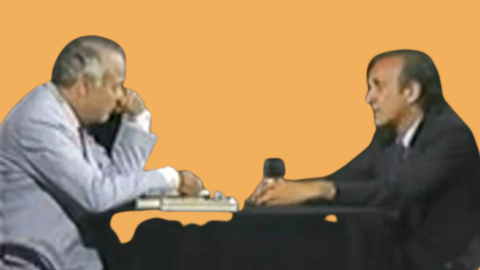
Aired in 1961, The Rejected was immediately recognized as a groundbreaking film that opened up for discussion some of the issues surrounding LGBTQ+ life and legal rights. Several experts — a psychiatrist, a district attorney, religious leaders — discussed societal norms, LGBTQ+ life in a heterosexual society, and issues of rejection and isolation. Unprecedented for its time, The Rejected was considered both educational and courageous. Now, decades on, viewers can clearly ascertain the remarkable progress achieved by the LGBTQ+ liberation movement.
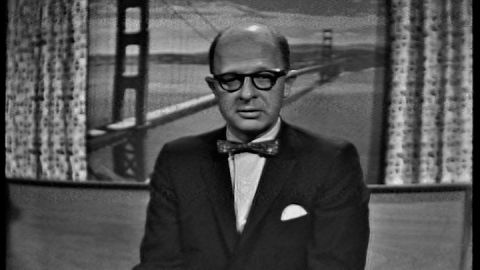
James Day, General Manager of TV station KQED in San Francisco, provides important context for the discussion.
Part of the Legacy Archive Project of Exploring Hate: Antisemitism, Racism and Extremism, The Rejected is one of 50 films featured in this new public media content initiative. Providing historical context for the rise of hate in America and elsewhere, the Legacy Archive Project seeks to engage audiences to promote understanding, healing and civility. The films of the Legacy Archive Project touch on everything from antisemitism and the Holocaust to racism, slavery, Jim Crow and other examples of injustice and cruelty. The Rejected was an effort to examine the topic, and to challenge perceptions of LGBTQ+ life in the context of the early 1960s – a time when opening up a dialogue about this subject was itself a revolutionary act. Decades of grassroots activism and determined political pressure have since led to significant gains.
On his very first day in office, President Joe Biden signed an Executive Order extending federal laws prohibiting sex discrimination to cover sexual orientation and gender identity as well – in employment, education, housing, health care and other fields. President Biden also issued an Executive Order ending the previous administration’s ban on military service by transgender Americans. In March, there was the Executive Order establishing the White House Gender Policy Council, and in February, the President signed an Executive Order expanding U.S. refugee admissions by cancelling a requirement to specify sexual orientation and gender identity.
While all of these measures should be applauded, the LGBTQ+ community is under significant threat even today. In just the first few months of 2021, more than 100 anti-transgender bills were introduced in 33 states. Anti-equality extremists are still targeting and attacking members of the LGBTQ+ community, with hate crimes at a disturbingly high level. Many of the attacks — including murders — have gone unresolved, especially those committed against transgender people.
The Equality Act, which would amend the 1964 Civil Rights Act explicitly to prohibit discrimination based on sexual orientation and gender identity, passed the House but failed to win the vote in the Senate. In many parts of the country, discrimination against LGBTQ+ people still is permitted under the law. The Equality Act would expand protections in employment, housing, public accommodations, and other essential areas.
When the film The Rejected first aired in 1961, an open discussion about LGBTQ+ life and its impact on society was considered revolutionary. The film offers an eye-opening impression of attitudes and beliefs about LGBTQ+ life at the time, a reference point for advances achieved in ensuing decades — and a sense of the importance of continuing the struggle.
The Legacy Archive Project of Exploring Hate: Antisemitism, Racism and Extremism launches with the hope of increasing our understanding of one another, while advocating for inclusion and tolerance. That is the only way to ever break down barriers, debunk misinformation and achieve equality. Or, in the deathless words of civil rights leader Fannie Lou Hamer: “Nobody’s free until everybody’s free.”
The views and opinions expressed are those of the author.