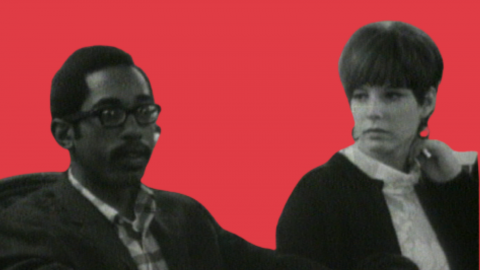
- I am James Day, General Manager of KQED in San Francisco.
The program you're about to see deals with a subject
which is controversial, delicate,
and to some, downright unpleasant.
In dealing with this subject,
we were mindful of the fact that it is surrounded
by a good deal of sensationalism and morbidity.
We were, however, equally mindful of the fact
that our problem, however unpleasant
in its proportions and natures, does indeed exist.
It is the nature of our social system
that the first step in the solution to a problem
is a recognition of the problem, a gathering of the facts,
and a discussion of these facts.
In our convictions
about the nature of the problem and its importance,
we discussed it with a great many leaders
in the field of law, medicine, and religion.
We found that they corroborated
our conviction about the problem and felt as we did
that it needed to be discussed.
Many of these people you will meet
in the minutes which follow, one of them
the chief legal officer of the state of California
has written us a letter which I would like to read to you.
He says, "The problem of homosexuality is age old.
"In ancient Greece and Rome,
"this condition was apparently accepted as a way of life.
"In this country, the opposite is true.
"In fact, it is hard to find any subject
"about which the feelings of society are as strong.
"With all the revulsion that some people feel
"toward homosexuality, it cannot be dismissed
"by simply ignoring its presence.
"It is a subject that deserves a discussion.
"We might just as well
"refuse to discuss alcoholism or narcotics addiction
"as to refuse to discuss this subject.
"It cannot be swept under the rug.
"It will not just go away by itself.
"And quite possibly,
"an objective discussion of this condition
"might lead to a broader understanding of the subject.
"This program attempts to explore
"the problem of homosexuality, to cast light into an area
"in which the shadows have long been deep."
The letter is signed Stanley Mosk,
Attorney General, state of California.
- [Narrator] 18% of all American men,
for at least three years during their adulthood
have as much or more sexual experience
with other men as with women.
That's the estimate given by Dr. Alfred Kinsey in his book,
Sexual Behavior in the Human Male.
In other words, approximately 15 million men in this country
have or will have prolonged homosexual histories.
When this fact about a person becomes known,
he is, in truth, rejected.
[ominous music]
This is a program about homosexuality.
What causes it?
Is there a cure for it?
What does the homosexual say about his condition?
What does society feel about the homosexual?
To answer these questions, here is Dr. Margaret Mead,
world famous anthropologist and associate curator
of the American Museum of Natural History in New York.
- Homosexuality is not only found in great civilizations
like the civilization of the United States,
but it is found among peoples at every level of culture,
among very simple people in the Arctic,
out on South Sea islands, and among the brave
warrior-like tribes of the American Indians.
It was found in ancient societies,
and there are also some societies
where homosexuality is virtually unknown.
I myself worked with one group in New Guinea
where there was not a single individual
who showed any signs of identification with the opposite sex
and where the people themselves
did not recognize homosexuality at all.
But when we looked the whole world over,
both in terms of anthropological studies
of primitive people and historically,
it seems very clear that whether or not homosexuality occurs
to any extent isn't entirely a matter of culture.
Now, of course, there are certain biological cues
that culture acts on.
Human beings, like all young mammals, are playful,
and a kind of sexual roughhouse and play
is one of the things that characterizes young mammals
everywhere in the world.
So there's a kind of playful homosexual behavior
that is found in a great many societies
and that we can think of as a prelude to courtship
and later, mature mating.
Then also, there seem to be a small number of people,
not very many, but a small number
who are born with a definite physiological bent
towards identification with the opposite sex,
and they occur in almost every society.
But whether they do anything with them or not
is entirely a matter of culture.
But they give cues.
If you had one man in the society
that would rather act like a woman, dress like a woman,
then many others can follow his example if they wish to.
And finally, and this is probably more responsible
in high civilizations, as soon as a culture
begins to discriminate between individuals,
and any woman isn't the same as any other woman,
and individuals can be seen
in terms of their temperament and personality,
you will also get formation of relationships
that's independent of sex, and this is characteristic
of sophisticated high civilizations
where personality matters.
Now, beyond that, a society may approve
of both male and female homosexuality.
It may approve of one and absolutely forbid the other.
There may be regular expected roles for the homosexual
so that the women will look at small boys
and say a particular one, "Probably, when you grow up,
"you're going to be a transvestite."
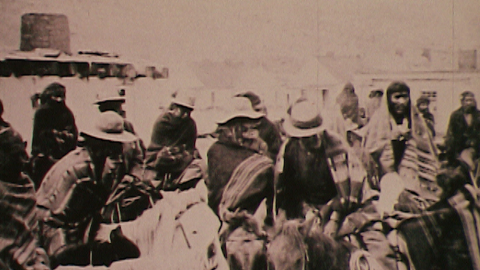
There are American Indian tribes
where a transvestite who can do everything a man can do
and everything a woman can do is regarded as superior
to either the heterosexual man or the heterosexual woman.
And there's one American Indian tribe
where pairs have been
"marry each other and even pretend to have children."
So throughout the world, whether it's a question
of the relationship between teacher and pupil
as in ancient Greece, or between pairs of young warriors,
or whether as among some of the Siberian tribes
or religious practitioners,
both men and women were transvestites,
we find that it's society that patterns homosexual behavior.
It's society that tells young children
that these are possible roles or impossible roles.
And it's society that treats the practices of homosexuality
or the identification of an individual as only interested
in playing a particular homosexual role,
it's society that treats these either as sacred or profane,
as preferred or as criminal.
It's society that turns those individuals,
who either by a physiological bent,
or by a psychological experience in childhood,
or sometimes by occupational choice,
a religious choice or an artistic choice,
prefer exclusive or partial homosexual practices.
It's society that says
that this is either good or bad behavior.
And equally, there are societies
that are so aggressively heterosexual
that they deny to individuals even warmth or tenderness
or friendship towards their own sex.
So if we look the whole world over, with all that we know
about people at each period of history,
we have to say that homosexuality
is a potential of human beings.
And human beings are deeply bisexual
and bisexual at different periods in their maturation.
And whether the society
is going to assign homosexual behavior to adolescents
or to adulthood as appropriate for some men and no women
or some men and some women, or to put it all together,
or treat it as a crime and condemn those individuals
with homosexual propensities
to living a life as exiles and criminals,
this is entirely a matter of culture.
Society has set up the way sex is to be lived,
and it is within the power of each society
that it's able to change,
to change any one of their attitudes
towards this question as they wish.
- [Narrator] The role of the homosexual
is established by his society.
How prevalent is homosexuality in our society?
What do we know about the causes?
What is a homosexual?
Here is Dr. Karl Bowman,
former director of Langley Porter Clinics,
past president of the American Psychiatric Association.
- I have been a psychiatrist for 45 years,
and I've spent a good deal of time
studying problems of homosexuality.
At one time, I carried out a four-year research
on sex deviation for the state of California.
Even the simple question like what is homosexuality
is hard to answer.
If we take only persons convicted of homosexual crimes,
we get a very inadequate idea of the whole problem.
From the standpoint of overt behavior,
Professor Kinsey's classification,
which divides individuals up into seven different groups,
is very interesting.
Here, number six, we have the complete homosexual,
the individual who is interested only in homosexuality
and not in heterosexuality.
Here, number three, we have the individual who is 50/50,
half homosexual, half heterosexual.
Here at zero, we have the individual
who has no interest in homosexuality
and is completely heterosexual.
There's a great difference between different individuals,
between the individual who is completely homosexual
and the other individual who perhaps
is predominantly heterosexual, as in one and two,
but occasionally homosexual.
We also find that there's a group of homosexual prostitutes
who usually have no real heterosexual drive
but who, like heterosexual prostitutes,
usually get no satisfaction from such experiences
but do it solely for the money.
Then we have individuals with homosexual tendencies
who have never had any overt homosexual experiences.
These can be divided into two groups.
One group consists of individuals
who have conscious homosexual drive
and who are attracted sexually by members of their own sex
but not by individuals of the opposite sex.
In other words, they control their behavior
to conform to conventional standards,
just as there are many women who are attracted sexually
by members of the opposite sex but who remain virgin.
Then finally, we have individuals
whose homosexual tendencies
are represented in the unconscious
in the repressed or unconscious homosexual.
The psychiatrist on this study may find
that the individual's unconscious homosexual desires
are affecting his behavior and his emotional life,
but that at the conscious level,
the individual considers himself heterosexual
and would be much upset if anyone claimed
that he was a homosexual.
Therefore, when we are discussing
the problem of homosexuality,
we must not fall into the error of assuming
that all the individuals so labeled are exactly alike.
Generalizations become more difficult.
In discussing the problem,
people generally think of the group we refer to
as the overt homosexual.
Society is interested in the overt homosexual
who leads a fairly active homosexual life
and who may be responsible
for initiating others into homosexual activities.
The latent homosexuality
is ordinarily no legal or sociological problem,
although his latent homosexuality
may result in neurotic behavior,
which brings him to the psychiatrist.
Returning to the overt homosexual,
we find that Professor Kinsey
has some very interesting statistics
as to the prevalence of homosexuality,
although he himself stated that he did not have
a random selection of the total population.
According to Professor Kinsey's studies,
4% of all adult males are completely homosexual
and have only homosexual activity.
18% are more homosexual than heterosexual
in their experiences after adolescence.
And finally, 37% have had at least one homosexual experience
leading to orgasm after adolescence.
This gives us some idea of the magnitude of the problem
if we realize that one man out of six
is more homosexual than heterosexual.
Is it possible to diagnose a homosexual
simply by seeing him and talking with him for a few minutes?
Many homosexuals claim that they can do this,
and psychiatrists who've worked a great deal
with homosexuals can undoubtedly spot a majority of them.
On the other hand, the average individual
would fall down very badly in attempting to do this.
There is a common idea that the male homosexual
is detected by body build, dress, speech, general behavior.
It is true that almost anyone
can spot a certain group of homosexuals
by their tendency to feminine dress and feminine manners.
The type of haircut, the use of perfume and even lipstick,
the excessive amount of jewelry worn,
as well as the mannerisms and behavior
may betray such an individual as homosexual to anyone.
However, there are plenty of male homosexuals
who have broad shoulders, heavy build,
who seem to be the epitome of masculinity.
It has been claimed by many observers
that homosexuality is more frequent among athletes
and persons in the military service, the two groups
that would seem to be the symbols of masculinity.
Freud regarded homosexuality
as an arrest of sexual development,
and homosexuality is one phase
through which all individuals pass
as a part of the sex development.
Many feel that psychological factors are most important
in causing homosexuality.
They emphasize the early developmental years of a child
with his relationships to the father and the mother
as having a profound effect on the final pattern
of the individual sexual behavior.
Others emphasize the effect of the whole cultural pattern
and feel that it may very well affect
the incidence of homosexuality,
and particularly the amount of overt homosexuality.
Time permits only a very brief mention
of methods of treatment.
In general, treatment is difficult and particularly so
in the group of so-called complete homosexuals.
Much will depend upon the individual's attitude
and his wishes to be changed.
Freud himself was not too optimistic
about curing homosexuality.
In a letter to a mother who wrote him about her son,
he gave this account of his own views,
"I gather from your letter that your son is a homosexual.
"I am most impressed by the fact
"that you do not mention this term yourself
"in your information about him.
"May I question you why you avoid it?
"Homosexuality is assuredly no advantage,
"but it is nothing to be ashamed of.
"No vice, no degradation.
"It cannot be classified as an illness.
"We consider it to be a variation of the sexual function,
"producing a certain arrest of sexual development.
"Many highly respectable individuals
"of ancient and modern times have been homosexual,
"several of the greatest men among them,
"Plato, Michelangelo, Leonardo da Vinci, and others.
"It is a great injustice to persecute homosexuality
"as a crime, and a cruelty too.
"If you do not believe me,
"you read the works of Havelock Ellis.
"By asking me if I can help, you mean, I suppose,
"if I can abolish homosexuality
"and make normal heterosexuality take its place.
"The answer is, in a general way,
"we cannot promise to achieve it.
"In a certain number of cases, we succeed in developing
"the blighted germs of heterosexual tendencies
"which are present in every homosexual.
"It is a question of the quality
"and the age of the individual.
"The results of treatment cannot be predicted.
"What analysis can do for your son runs in a different line.
"If he is unhappy, neurotic, torn by conflict,
"inhibited in his social life,
"analysis may bring him harmony,
"peace of mind, full efficiency
"whether he remains a homosexual or gets changed."
- [Narrator] What do other homosexuals
think about these so-called queens?
What are their feelings about themselves
and their place in society?
The Mattachine Society has its headquarters in San Francisco
and offices in New York, Chicago, Boston, and Denver.
Its aim, to help its own members
with counsel and legal advice,
and to attempt to educate the public on homosexuality.
Here are three members of the Mattachine Society,
Harold Call, president,
Don Lucas, executive secretary,
and Les Fisher.
- We think the swish or the queen
represents, actually, a small minority
within the whole homosexual grouping.
But to the public, this is a stereotyped view or picture
by which all homosexuals are judged it seems.
These people, actually, in most cases
are not even liked by the rest of their homosexual brethren
because they have perhaps rejected themselves
and they feel that society has rejected them.
To dispel part of this stereotyped picture,
we formed the Mattachine Society, which has as its purpose
work in education, research, and social service
in this whole homosexual problem.
The word mattachine comes from the language of Provence
in Southern Europe.
It actually means little fool.
The mattachines in the medieval ages were the court jesters,
the clowns, the soothsayers, the teachers, prophets
who stood behind the throne and could often speak the truth
in spite of stern consequences.
The purpose of the organization is to publish a magazine,
to hold public discussion forums,
and to educate and to aid homosexuals,
individuals and in groups, in various ways.
It's not a pen pal organization,
nor is it an organization for homosexual contact.
We are calling for a change of law
because we know the number of homosexuals is large.
- Speaking of the number of homosexuals here,
it is a common misconception, I believe,
that the homosexual is congregated
in such large cities throughout the country
as New York, San Francisco, et cetera.
But I think that we can safely say that a homosexual
is found everywhere, in every small community,
every rural district throughout the country,
because we receive letters from such places
as Encampment, Wyoming, Chappell, Nebraska,
Old Hickory, Tennessee, all of those places.
And many of these letters that we receive
show that the individual there
is looking for assistance with a particular problem,
a personality problem that he has.
- Incidentally, protecting the young
is one of the important planks in the Mattachine platform.
We know that laws serving that purpose
must always be enforced in this country, in our cultures.
Les, do you think marriage is good or bad for homosexuals,
as a coverup, for instance?
- Well, having been married myself,
I would like to say that I think
that a good many homosexual people would not be homosexual
had they have had a heterosexual experience early in life,
but I certainly wouldn't recommend it as a cure
in any way, shape, or form for homosexuality.
- Well, would this bring about a, shall we say challenge
to a girl, for instance, to change a homosexual,
do you suppose?
- Well, many girls undoubtedly have felt that challenge,
and some have indicated
that homosexuals are wonderful escorts
because they are very thoughtful partners
and considerate in being out on dates and so on.
The homosexual as a security risk is another thing
that is of great concern to us.
And here again, we believe that it's the law itself,
public attitude, and the stigma that exists
against homosexuality which does, in some instances,
make a homosexual a security risk.
By and large, if these laws were changed,
we'd find, I think,
that the homosexual is no different than anyone else
except perhaps in his choice of a love object.
He desires the same kind of rights to live his life freely
and without interference, to pursue his happiness
as a responsible citizen, and to receive the benefits
of constitutional rights, due process
and protection of the law that all of us enjoy.
- [Narrator] Benefits and protections of the law.
What law?
In what state?
Here's Mr. Albert Bendich,
lawyer and lecturer at the University of California.
- A basic though little realized fact
is that the statutes in this area, for the most part,
are not aimed at homosexual activity as such,
but rather, they are aimed at certain sex acts
irrespective of the gender of the participants.
I am not primarily concerned here with offenses,
whether homosexual or heterosexual, involving children,
or those enacted forcefully, or those done in public view.
I am going to limit my concern
to laws governing private adult behavior
between mutually consenting persons who are adults.
With respect to this area, the basic fact is that the laws
which have been aimed at controlling such conduct
are and have proved to be unenforceable.
Most of our states have statutes which punish as criminal
a wide variety of sexual activity,
adultery, for example,
but these statutes are largely dead letters
because they are unenforceable.
Since Kinsey pointed out, for example,
that one half of all married males
at some time during their lives commit adulterous acts,
we should, were we to attempt to enforce these statutes,
be confronted with the probability
that our country would have to be turned into a jail.
Now, what sorts of acts do the statutes in question aim at?
Nearly all of our states have laws
which punish sexual activity
of an oral-genital nature and sodomy.
Now, of course, these acts may be performed
by married couples, and it is a fact of some interest
that married couples are frequently urged
to engage in such activity by the many marriage manuals
which are widely available today.
In addition to married couples
being capable of behaving in this fashion,
almost any other conceivable combination
of human beings may also.
The penalties in this area for such activity
are extremely severe.
In maximum terms,
they range from three years to life imprisonment.
And frequently, where persons are convicted
of such offenses, they are required to register
with the local law enforcement authorities
and to stay registered,
and to re-register upon every change of address.
These laws are frequently incredibly self-contradictory
and totally irrational.
For example, in Ohio, oral-genital sex acts,
if they are engaged in by females, are perfectly legitimate.
If they are engaged in by males, they are criminal.
If they are engaged in by married couples
and the female partner is active, a crime is committed.
If, on the other hand, a married couple
engages in this activity, but the female partner is passive,
again, the activity is perfectly legitimate.
And Ohio is no exception, nor is it in any way unusual.
Clearly, if we were going to enforce these laws strictly,
we would turn the country into a police state,
if not a lunatic asylum.
Happily, the civilized trend
is away from criminal punishment
of private consensual adult sexual behavior.
History has shown that these laws do not work
to achieve the purposes claimed for them.
The attitude of a lady
at the time of the trial of Oscar Wilde
may illustrate the trend
which I am attempting to point to here.
She was asked what she thought
of so-called deviant sexual behavior engaged in by adults,
and what she said was, "I don't care
"what sort of sexual activity adult persons behave in
"or engage in so long as they don't do it in the streets
"and frighten the horses."
- [Narrator] But the laws are on the books.
How are they enforced?
Can they be enforced?
Here is Thomas Lynch, District Attorney
of the city and county of San Francisco.
- As district attorney, it's my job
to uphold the laws of the state of California.
As Mr. Bendich said,
our laws refer to acts rather than people.
You might be interested in knowing
what the classifications of sex crimes are.
First are the crimes against children.
These are probably the easiest to prosecute
because usually, there is a complaining witness present.
Second would be crimes of violence, such as forcible rape.
Third would be forcible unnatural acts.
And fourth would be crimes
which are specified in the penal code
as being against the law because of their very nature.
These crimes, such as sodomy, may be done
with the full compliance of both parties,
they are still illegal.
It's probably obvious
from the very description of these crimes
that prosecution is increasingly difficult with each one.
In other words, it's much easier to prosecute
a crime against a child or a sex crime of violence
than it is to prosecute a crime
which is committed privately and willingly.
As a matter of fact, the only way
that we can prosecute these crimes committed in private
is if there is a complaint made by a third person.
I would also add that what adults do in private
can sometimes have some pretty shocking results
for the rest of society.
One example would be in the field of public health.
- [Narrator] Here is Dr. Erwin Brown,
director of the Bureau of Disease Control in San Francisco.
- The homosexual appears to have
an increasingly evident health hazard, venereal disease.
This is evident in the reports from large metropolitan areas
with good venereal disease control programs.
Here in California, San Francisco and Los Angeles show
that approximately 75% of males
with early infectious syphilis
have acquired their infection from other males.
The same can be said of other large cities in the country,
New York, New Orleans, Kansas City.
In other health jurisdictions that perhaps does not,
that do not have such a high figure,
this may be more a reflection
of the type of VD control program they have
rather than on any specific differences
in the population served.
How do we arrive at this 75% figure
if the homosexual is supposed to be so secretive?
Obviously, he acquired his infection from another person,
and by educating him to the importance of control,
guaranteeing the confidentiality of the information secured,
we're able to elicit his cooperation
and get this necessary information.
There are probably three other aspects of this
that may be worthwhile mentioning.
One, the sexually active homosexual,
in general, is probably more promiscuous
than his heterosexual counterpart,
the greater the risk, obviously,
the greater the chance of acquiring a venereal disease.
Two, in our education about venereal disease,
such as in the military and what have you,
we find that men get VD from girls,
prostitutes, and this generalization is accepted.
And so many men are not aware of the fact
that they can acquire a venereal disease from another male.
Venereal diseases are transmitted
through close, intimate sexual contact,
and sexual contact between two men can meet these criteria.
Understandably, an infected person
is quite willing to acknowledge
he acquired an infection from a drinking glass, a towel,
but is unable to accept the idea
that the partner of the previous week gave it to him.
Third, we find that the heterosexual frequently use a device
which although sold for the prevention of disease,
it is its associated contraceptive powers
that makes it acceptable.
The homosexual does not have a similar motivation
in his sexual activity, namely the control of conception.
I would like to stress
the departments of public health are concerned
primarily with the control of communicable disease.
I would like to remind you
that a venereal disease is not illegal,
nor does it necessarily have to be acquired
through illegal acts.
Therefore, health departments
have to be non-judgemental in their activities.
Confusion rein in the legal circles, psychiatric circles,
sociologic circles concerned with the problem
suggests we have no alternative.
By education, confidentiality of the information we have,
we hope we can do something about the situation.
- [Narrator] As you would expect, there is disagreement
about the laws relating to private sexual behavior,
not only among the public,
but among those concerned with the business of law.
Let us hear from two of these men.
Representing the retaining of legal sanctions
against these acts is Mr. J. Albert Hutchinson,
formerly with the Attorney General's office
and presently practicing law in San Francisco.
And against retaining these laws, Mr. Morris Lowenthal,
San Francisco attorney who has debated these issues often
with Mr. Hutchinson before the California Supreme Court.
Mr. Hutchinson.
- As indicated in my introduction,
my interest in this subject
is derived from my experience as a public officer
and of course, as a parent.
At the present time and frequently,
the subject whether these laws, or perhaps any laws,
should be changed comes up for consideration.
It is good that we reconsider these things
from time to time.
And my point of view is to urge
that there be no basic change in the existing laws.
I am not concerned with the kind of punishment,
but I am interested in seeing
that there be, on the statute books,
a declaration against this type of conduct.
These laws do not work against any group of people
or any kind of person.
They are against acts by whomever committed.
These acts are unnatural and can have no proper purpose
except the self-gratification of the individual.
To prohibit them would be desirable
both for the individual and for the society.
History has shown, I believe, without question
that a society which recognizes and tolerates activities
of this kind freely necessarily corrodes in other respects.
Therefore, if we do not declare these acts to be wrong,
unlawful, which is the only way we can do it in our country,
there is no standard for private conduct
and for the youth who are growing up
and getting their point of view for their future conduct.
As to enforcement, it may not be possible in many cases
to enforce the law, but you must not forget
that law is enforced by the people themselves,
and the vast majority of people will obey the law
because it is the law.
We do not tolerate self-indulgence in other fields
even though on the face of it, it might not hurt others.
I know narcotics is a good example.
I believe that we should have on the books
a prescription against this sort of activity.
It can lead to no useful end to tolerate it,
and it will simply reduce our moral standing,
our moral determination by taking the statute books
and putting the crimes that are so described aside.
That by itself amounts to almost an approval.
The individual, of course, is subject to blackmail,
and I think Dr. Braf has pointed out
one of the most compelling reasons
for prohibiting such acts
as far as the individual is concerned.
It also has a public aspect,
as readily indicated by the statistics.
We would prohibit people from doing perfectly lawful acts,
perfectly moral acts
if there was a danger of infecting others
because they themselves were in a position to infect others.
There's another point of view, of course,
and Mr. Lowenthal will present that.
- Now, Mr. Hutchinson has debated this subject with me
on several occasions and is repeating many of the fictions
and myths that we've heard on this subject for many years,
and it's about time we looked at the practical side.
He indicates himself
that it is impossible to enforce the laws,
and you've heard from some experts as to why,
because first of all,
there are a vast number of Americans involved here.
The minimum number, it's estimated,
would be 10 and to 15 million in America.
Actually, Mr. Kinsey at one time
testified to a legislative committee
that 46% of the United States population
has had some homosexual experience in their history.
In California alone, he indicated
there were over two million Californian males involved.
But Mr. Hutchinson said,
"Well, the people enforce the laws."
Is that true?
Experts in the field say
that there are six million homosexual acts
for every 20 arrests.
So we see that the laws are not enforced
by the police department, the district attorney,
or by the people themselves.
Why are the laws on the books?
In the common law, these were not violations.
These laws were adopted later.
They were adopted
before we had any knowledge of the true facts,
facts which have been developed by Dr. Bowman,
by Kinsey, by Engel, and others.
These laws reflect certain fiction,
some of which you've heard a few minutes ago,
the assumption, for example,
that homosexuality survives by proselytizing,
by teachers taking advantage of children
or adults taking advantage of children or of other adults.
But actually, as a study made
by California's subcommittee on sex crimes proved,
only a small percentage of homosexuals,
just like heterosexuals, attempt to seduce, assault,
or initiate relations with children or with other adults.
Now, the fiction that we heard here
that homosexuality is biologically unnatural,
is a very common fiction.
Kinsey's statistics have exploded it.
It's a common phenomenon among animals.
And as Kinsey once expressed,
neither biologists nor animals were consulted
when the laws were drawn.
As a matter of fact, all of these studies,
most of them within the last 10 years or 15 years,
have shown that homosexual conduct
is generally harmless to society,
that homosexuals are no menace to society,
that they do nothing to destroy the social structure
or to disrupt the family,
and as the legislative committee indicated,
they are not anti-sexual individuals.
And strangely enough,
they've exploded one other myth mentioned earlier.
Homosexuality did not cause a demoralization
or decay of civilizations.
They exist, homosexuals, in every occupation in every city.
Now, it's not a disease,
as some people have indicated or suggested,
but we have now been called attention to the fact
that there is an increase in venereal disease
among homosexuals, and Mr. Hutchinson says
that proves we should keep the laws.
It proves the reverse.
The laws should be removed.
Why?
Because the increase is due to the fact
that many homosexuals
hesitate to go to venereal disease centers
or to their own physicians.
They don't know their information will be kept confidential.
Actually, they're discouraged from doing so,
with the result of venereal disease increases.
But when we talk about venereal disease among homosexuals,
again, we're talking about a very small percentage
of the homosexual population.
Government regulation
and security programs in the armed services
have made second class citizens of these people,
and many fine persons have been dismissed from employment
and stigmatized purely on gossip.
These are other reasons why the law should be changed.
As a deterrent, of course,
to crime of violence, it does not exist.
The laws don't reduce the number of homosexuals
nor the number of homosexual acts.
And as to the moral code, there, again,
Mr. Hutchinson is confusing, as the law does,
sin, morals, and crime.
The code is a mere codification
of prejudices and superstitions
and ancient taboos that no longer exist.
The chief argument, however, against these laws
is that there's a great deal of blackmail,
entrapment, coercion of individuals.
Many people have committed suicide
because of being involved through blackmail procedures.
And this, in my opinion, is the basic reason
why the laws must be removed from the books.
- [Narrator] There are many doors
that are closed to the homosexual.
Government work is closed.
Teaching is closed.
In fact, if a man is a proven homosexual,
there are very few doors that are open.
How about his place of worship?
Is he rejected here?
Is he, by the very existence of his condition, sinful?
Here is Rabbi Alvin Fine
of Temple Emanu-El in San Francisco.
- The problem of homosexuality is one of serious concern
not only for the individuals involved in it
but also for the entire community.
It is a problem that bears directly
upon the integrity of family life
and the moral foundations of our society.
It is an extremely complex problem
about which we are coming to know more than we used to know
but not nearly as much as we still need to know.
Neither for the homosexual, nor for his family,
nor for the community has the condition been cured
simply by invoking moral condemnation
and applying legal prosecution and punishment.
Perhaps the best guide or approach to this problem
from the religious point of view
is summed up in the teaching of Judaism
that God does not desire the destruction of the evildoer,
but rather, the correction of the evil.
The present day social and legal approach
to the control of homosexuality
is based largely on the moral code of the Bible.
It is my opinion that although the underlying morality
or moral precept remains the same today,
there are significant and enlightened changes
in our attitude toward the homosexual
and our approach to the problem of homosexuality.
The biblical and post-biblical law
regarded homosexuality as immoral.
It was, therefore, simply an evil to be punished.
There was no basis then for considering the problem
as one involving a form of pathological behavior.
In brief, it is my interpretation of Judaism
that homosexual practice is still held to be immoral.
But moral problem that it is, we should regard and treat it
as a psychological illness rather than as a crime
subject to legal prosecution and punishment.
Finally, I would say that whatever solutions or remedies
we seek and adopt in the treatment and control
of the condition of homosexuality
with our increasing understanding of it,
we must be sure that those remedies and solutions
should not only preserve the moral integrity of society,
but they should also be based
on an enlightened moral concern for the individuals
caught up in the problem of homosexual behavior.
- [Narrator] And the Right Reverend James A. Pike,
bishop of the Episcopal Diocese of California
and member of the Bar of the United States Supreme Court.
- Of course, from the point of view of the church,
homosexual behavior is not good or desirable,
nor God's fulfillment, an intended fulfillment for man,
and hence, traditionally,
it has been in the category of sin.
But we've learned much more about human behavior
through the aid of the psychological sciences
and psychiatry and psychoanalysis,
and we recognize that very, very often,
this behavior is compulsive.
That is, it is not the exercise of a free decision making.
It is rather something that is brought upon one
without the capacity of freedom.
And there can be no sin unless there is freedom.
And therefore, we do not judge all persons
involved in this type of behavior as sinners,
but rather, seek to help through pastoral counseling
and referral and collaboration with,
referral to and collaboration with psychoanalysts
and other counselors of this type
to help in a change, it may be, by having help the person
see the basic factors which are brought about
by this deviational situation.
This question came up in England
in connection with the Wolfenden report,
and our church of England, through its archbishop,
had declared itself in favor
of the features of the Wolfenden report
which would remove the criminal aspect
of free consenting homosexual behavior between adults.
Obviously, any duress or any corruption of young people,
that's another thing, but the free consenting act,
not because the church was changing its mind
and saying homosexual behavior is an alternate way
that's just as good as the heterosexual way,
but because we recognize that not all things that are wrong
or distortions in personality patterns should be crimes,
and that there are negative and dangerous aspects
to having certain things as crimes, as in this field,
of course, blackmail police corruption, and so forth.
The recognition
also of the compulsive character of so much,
so many of these instances
makes it an inappropriate subject for criminal handling.
This does not mean that our concern
should be any of the less.
It does not mean that we should not seek
to learn more and more to help persons in this plight.
This is a complicated professional field
where the use of the best minds
in various professions is called for.
The person who is in this situation
is like anyone else with an illness and should be cared for,
as such, with love and concern and interest,
not casting them aside, not labeling them as evil
any more than we would do so these days with the alcoholic
who is in a compulsive drinking situation.
The essential hope of any counseling pattern,
whether pastoral or in collaboration with an analyst,
is to free the person so that he can make decisions.
At that point, we would hope, under the right influences,
he would decide against this way of life.
But until he is free so to decide,
we can't simply simplify the problem
by crying out the word sin.
- The doctors, the lawyers, and the clergy
have all had their say about the social behavior
and moral conscience of the homosexual.
But perhaps no one has asked
the most basic and important question of all.
Are homosexuals themselves satisfied with the way they are?
From our observation, I think we'd have to say they are not.
However, opinion is divided on this issue.
Some people, many homosexuals,
indeed have no other orientation, no other way of life.
Therefore, they have maybe no basis to make a judgment
of whether they are or are not satisfied.
However, they are all aware, I think,
of the fact that legal and moral sanctions
are against them throughout their lives
in their everyday behavior, on the jobs, everywhere.
These people, by and large, are unable to know and enjoy
the benefits of family
and the companionship which results from that.
They have feelings of inferiority
because of these sanctions against them.
They are labeled security risks by our government.
They are treated as undesirables in the armed forces
and given less than honorable discharges
from the armed forces
if any trace of homosexual orientation,
and sometimes even association, is discovered.
For instance, a few years ago, a large aircraft carrier
tied up at a West Coast port.
It had a compliment of about 3,000 men.
And an officer told me that when that ship docked,
300 of them were given less than honorable discharges.
Now, I wonder,
certainly, you can't say that the homosexual,
when he has these sanctions against him,
is a person satisfied with his condition.
Especially pitiful perhaps
is the condition of the older lonely homosexual,
the old auntie.
If he hasn't established a number of other values
in his life during his earlier years, he can often wind up
in a very lonely and often dejected situation.
In the Mattachine, we are seeking
acceptance of the homosexual in society.
Whether we approve of his type of conduct or not,
the fact is he is in our midst and in large numbers.
We hope that by acceptance,
he may be spared much of the derision
that society now points toward him
and that he may thereby be able to assume
his full and equal place as a human being in the community.
- [Doctor] Why did you come to see me?
- Well, I guess to cure it.
I wanna be like everybody else
and not lead this double life.
It's no fun to have a job
and always worry whether someone is going to find out
that I'm a homosexual.
- What do you think I can do for you?
- I don't know.
I don't know whether anything can be done.
I've tried dating girls, and it doesn't work.
There's no interest.
Well, I suppose it would be the same if you dated a boy.
The trouble is I just can't visualize a cure.
This thing seems too much a part of me.
- How long has it seemed this way to you?
- [Narrator] You wouldn't be able to tell
that the person you have heard is a homosexual.
His parents don't know it.
His neighbors don't know it.
His fellow workers don't know it.
There is one question left,
and for parents, it will be the most important one.
Actually, it is a double question.
What can a parent do to prevent his child
from becoming a homosexual?
And what should a parent do once it is obvious
that his child is a homosexual?
Again, Dr. Karl Bowman.
- It is possible that homosexuality comes about
from a number of different causes or combination of causes,
and that it is not necessarily produced
by the same factors in every individual.
With our lack of knowledge
and the many different opinions held
as to the causes of homosexuality,
it is obvious that we cannot come forth
with some universal method of treatment or of prevention.
Most of us feel that it is important for the male child
to have a desirable type of father figure
with which to identify
and for the girl to have a suitable mother figure.
Children are all curious.
Frustrating their desire for knowledge often results
in their attaching greater emotional significance
to such a subject.
Boys at adolescence are particularly curious
and inclined to experiment.
The mere fact that an adolescent boy
has indulged in a few homosexual experiences
does not mean that he will develop into a homosexual
and that he will not end up with a normal heterosexual life.
For this reason, parents should be tolerant
and understanding about his adolescent struggle
to work with his many emotional problems.
If parents are disturbed
about apparent homosexual tendencies
on the part of the child,
it is appropriate to consult a psychiatrist,
but this should not be done
in a way to upset or disturb the child
and perhaps cause still more emotional conflict.
In treatment, we would, of course,
like to turn all homosexuals into complete heterosexuals.
This is usually not possible.
We may be able to help the individual control his behavior
even if we cannot alter his homosexual tendencies.
As Freud has said, we may be able to help him
live with problem in a way that will not cause him
too much emotional disturbance and which will prevent
his getting into difficulties with others.
The attitude of parents and friends
will be most important in determining
whether a reasonable solution can be worked out.
If one male out of six is more homosexual than heterosexual
in his overt behavior,
and if we add those with repressed homosexual tendencies,
the number of homosexuals will be much greater than this.
It is clear, therefore, that this is a large problem
and that we are going to have to live with it.
The attitude of some people is to try to treat it
in an entirely punitive way with the idea
that the more severe the punishment and disgrace,
the less likely that this condition will occur,
at least as far as overt behavior is concerned.
It is interesting to note, however,
that many countries and cultures
have no taboos against homosexuality,
and that even in Europe, the only places
where one finds ordinary homosexuality a crime
is in communist Europe, West Germany, and Great Britain.
We have no evidence that there is less homosexuality
in the countries that have the most restrictive laws.
- [Narrator] These are the rejected, millions upon millions,
a few of them satisfied, many of them desperately unhappy.
We have brought you some of the facts
and presented some of the arguments.
Perhaps with more facts and more argument
will come the beginnings of understanding.
[ominous music]
- [Announcer] This is NET, National Educational Television.